




The Strategic Ascent: How AI Elevates the Medical Writer from Documentarian to Scientific Architect
Feb 03, 2026📈🤖 Medical writing is undergoing a strategic shift—and AI is no longer just accelerating workflows, it’s redefining the role itself. Today’s medical writers are moving beyond documentation to become scientific architects: shaping narratives, aligning evidence with strategy, and driving clarity across increasingly complex regulatory, clinical, and medical landscapes.At AlphaLife Sciences, we see AI not as a replacement for expertise, but as a force multiplier—augmenting human judgment, enabling earlier insight, and elevating the impact medical writers can have across the product lifecycle. From protocol development to submissions and beyond, the convergence of domain knowledge and intelligent systems is changing how decisions are made and stories are told. 🚀🧠
As we navigate the rapidly evolving global clinical landscape of 2026, driven by emerging therapies and accelerating technological advancements, the pharmaceutical industry is facing an undeniable imperative: speed, quality, and efficiency. Innovative fields like cell and gene therapies and oncology trials introduce new complexities. To thrive in this environment, life sciences organizations must move beyond manual processes that traditionally slowed down timelines and innovation.
At AlphaLife Sciences, we believe that Generative AI (GenAI) is not just a tool for automation; it is a catalyst for professional transformation. Our flagship platform, AuroraPrime RMA (Regulatory and Medical Authoring), is designed specifically to revolutionize regulatory and medical document creation. By automating the tedious and repetitive work, AuroraPrime RMA is empowering medical writers to reclaim their time and pivot to the strategic scientific tasks where their expertise matters most.
The role of the medical writer is shifting decisively beyond mere documentation.
The End of the Manual Grind
For decades, medical writers have borne the significant manual burden of clinical content creation. Imagine converting complex data tables and figures (TFLs) into narrative text, managing endless versions, and ensuring consistency across massive documents like Clinical Study Reports (CSRs), Development Safety Update Reports (DSURs), or Periodic Benefit-Risk Evaluation Reports (PBRERs). These processes traditionally consumed weeks of valuable time.
AuroraPrime RMA radically changes this timeline.
Our GenAI solutions boast a 90% reduction in first draft time and a 45% to 50% overall time reduction for CSRs. Tasks that used to take weeks now take minutes.
This acceleration is possible because AuroraPrime automates core, time-consuming functions:
Automated Initial Draft Generation: The platform leverages AI-enabled templates and knowledge bases to rapidly produce comprehensive first drafts of documents like protocols, CSRs, and patient safety narratives by synthesizing upstream documents and data.
Large-Scale TFL Automation and Summarization: Instead of painstakingly transcribing and summarizing complex statistical outputs, AuroraPrime RMA efficiently incorporates TFLs (Tables, Figures, and Listings). Crucially, the AI-Powered TFL Summary Generation feature converts complex raw data into clear, evidence-based narratives.
By offloading these mechanical, high-volume tasks, AuroraPrime liberates the medical writer from the role of data clerk, allowing them to focus on the essential aspects of scientific interpretation.
Stepping into the Strategic Analyst Role
When automation takes care of 90% of the initial draft, the medical writer’s responsibilities elevate to the realm of strategic analysis, oversight, and scientific quality control.
The new mandate is not about creating the content; it is about validating and refining the science within the content.
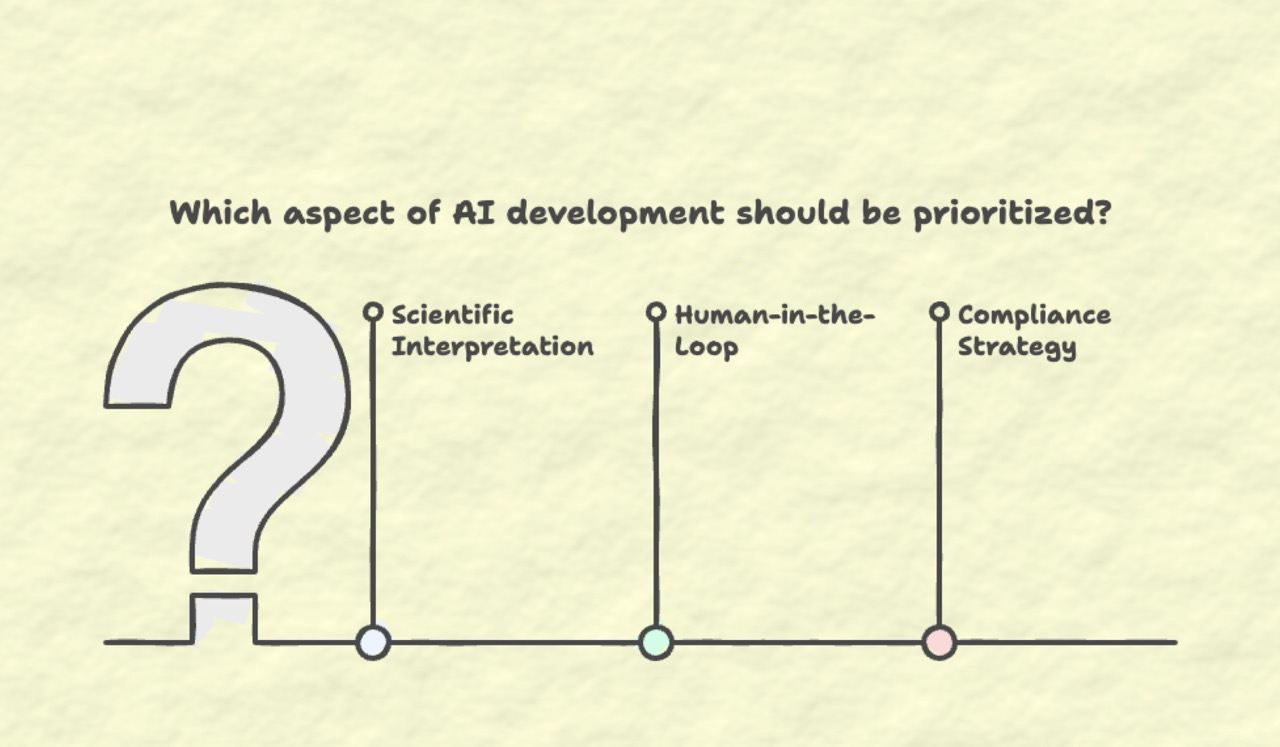
1. Scientific Interpretation and Factual Validation
A primary focus for the modern medical writer is ensuring that the AI-generated narrative accurately reflects the underlying scientific context and data integrity.
Factual Accuracy: Medical writers utilize the platform's rigorous AI Quality Control Framework. This includes tools like "Validate TFL Summaries," which automatically compares generated text against the source TFL data, highlighting discrepancies for human review and necessary auto-correction.
Contextual Alignment: Writers apply their clinical expertise to contextualize data, focusing on presentation and clinical relevance. For example, they interpret and analyze data presented in TFLs to contribute to the overall interpretation of study outcomes.
2. Guiding the Generative Intelligence (The Human-in-the-Loop)
The AI in AuroraPrime operates using a Human-in-the-Loop (HITL) interaction model. This ensures that human judgment—not algorithm mechanics—drives the final content quality. Medical writers remain in full control of the end-to-end process.
This means the writer directly shapes the AI's output:
Defining Quality: Writers provide direct feedback on AI-generated content (translations, summaries, polished text) using "thumbs up" or "thumbs down". This feedback is crucial; if content is inaccurate, misleading, or irrelevant ("False Content" or "Irrelevant Content"), the writer categorizes the issue, which is then retained and used to continuously refine the AI's performance.
Customizing Communication: Writers leverage custom prompts and examples to tailor the AI's style, structure, and tone, ensuring the output aligns perfectly with corporate guidelines and target audiences.
Template and Knowledge Governance: Experienced writers step into the role of Template Admin or Content Admin. They configure the content generation rules and maintain the reusable content libraries, ensuring standardization and consistency across therapeutic areas and documents.
3. Compliance and Regulatory Strategy
The pharmaceutical industry is highly regulated, necessitating strict adherence to standards like GxP and ICH guidelines. The medical writer’s strategic role ensures that the accelerated efficiency provided by AI does not compromise compliance.
AI tools handle traceability by logging all generated content, user feedback, and rule changes. The writer must oversee this auditable trail, ensuring that the final document is transparent and compliant. Furthermore, their strategic focus shifts to managing complex submissions, ensuring consistency when reusing content across related documents (like PBRERs and DSURs), and adapting documentation for global regulatory needs through features like Multilingual Document Support.
Elevating the Medical Writer’s Influence
By transitioning from operational tasks to strategic oversight, medical writers gain influence across the drug development lifecycle. Their scientific acumen, previously consumed by manual documentation, is now directly applied to critical decision-making processes.
AI in life sciences is not replacing the medical writer; it is serving as a powerful co-pilot, maximizing efficiency and intellectual output. This collaboration ensures that expertise remains focused on the highest-value activities: accelerating clinical success and confidently bringing life-changing treatments—whether for oncology, CNS disorders, or rare diseases—to patients faster than ever before.
AlphaLife Sciences is proud to be the leading generative AI-powered digital solution enabler for life sciences, positioning the medical writer as the scientific architect of the future.
