




Accelerating Regulatory Excellence: Key Takeaways from AlphaLife Sciences at the 2026 DIA RSIDM Forum
Feb 05, 2026What does the future of regulatory excellence look like when AI, domain expertise, and real-world regulatory challenges converge? 🚀From accelerating complex regulatory documentation to improving consistency and compliance at scale, the insights shared at the forum highlighted how AI is no longer a distant vision—it is already reshaping how forward-thinking organizations operate today. 🧠⚙️At AlphaLife Sciences, we were proud to contribute to these discussions and showcase how AI-driven innovation can empower teams to move faster, reduce risk, and elevate the quality of regulatory and medical writing across the product lifecycle.
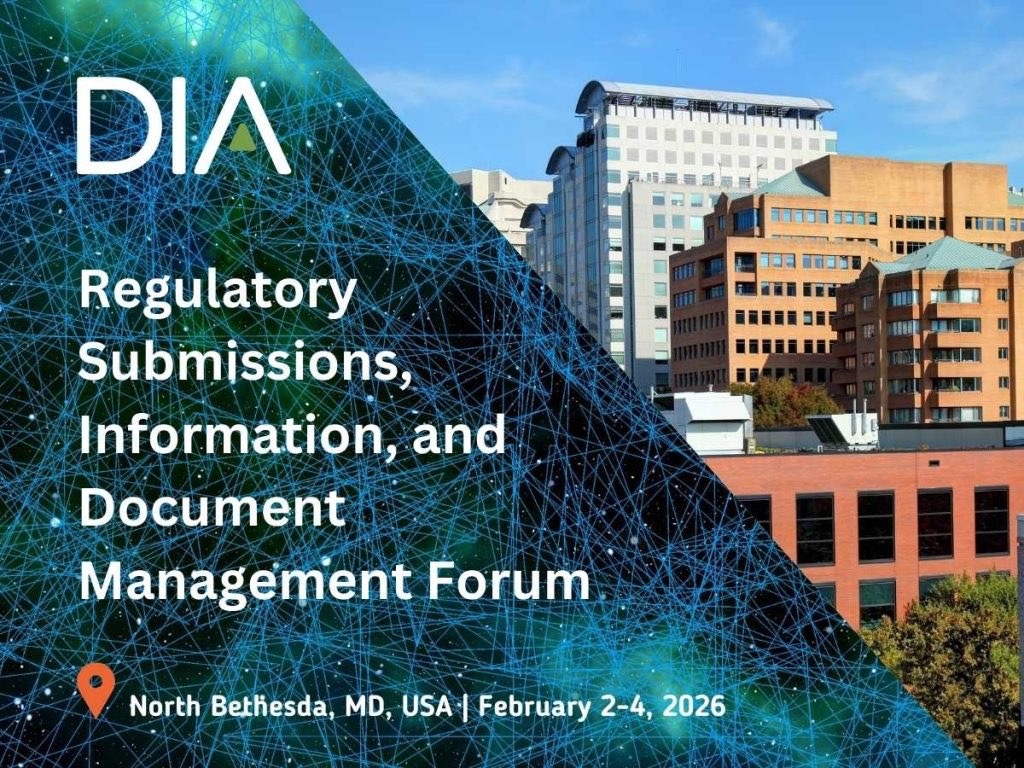
The atmosphere in North Bethesda earlier this month was incredibly inspiring as industry leaders gathered for the 2026 DIA Regulatory Submissions, Information, and Document Management (RSIDM) Forum. This event serves as a premier platform dedicated to optimizing the operational efficiency of regulatory information, all with the ultimate goal of accelerating patient access to life-saving therapeutics.
For AlphaLife Sciences, participating in this forum was a natural fit. Our core mission is to build resilient, AI-powered ecosystems that manage complex information with absolute precision, streamlining the end-to-end lifecycle of regulatory assets from raw data to submission-ready outputs.
Navigating the R&D Paradox with AI-Orchestrated Authoring
A major highlight of the event was the presentation delivered by William Chen, our Principal Business Solution Architect. Addressing a packed room on February 2, William's session focused on how leading global pharma companies are embracing AI to automate regulatory and medical documents with built-in quality control.
William opened by highlighting a profound paradox currently facing the pharmaceutical industry: unprecedented market and pipeline growth paired with escalating R&D costs and diminishing returns. He articulated a pain point that deeply resonated with the audience—the "change chaos" caused by fragmented data inputs, extreme post-lock time pressures, and interoperability gaps across the document network.
The path forward, he explained, relies on transitioning from manual document assembly to AI-orchestrated authoring. William demonstrated how generative AI, when governed correctly, can dramatically improve speed and quality while reducing compliance risks.
Transforming the Document Lifecycle Across Domains
Rather than speaking in theoretical terms, William walked the audience through highly practical applications of the AuroraPrime RMA platform across four critical regulatory domains:
Clinical Study Reports (CSRs): William showcased how AuroraPrime automates first drafts and seamlessly synchronizes Tables, Figures, and Listings (TFL) data directly into the document, all while running automated quality control to ensure data integrity.
Clinical Summaries (M 2.7.3 & M 2.7.4): He highlighted a dynamic, key-message-driven authoring workflow. Instead of rewriting content, the platform anchors draft generation to the upstream CSR, automatically refreshing and realigning the summary text when the source data changes, ensuring QC-ready traceability.
Non-Clinical Documents: Addressing the heterogeneous nature of M 4 inputs, William demonstrated how the platform ingests massive volumes of study reports to automate M 2.6 summaries, utilizing an innovative "Scientist-in-the-Loop" abstract layer for expert interpretation.
CMC Authoring: Module 3 authoring is notoriously complex due to cross-functional collaboration. William illustrated how AI can orchestrate this process through traceable change control, automated dependency mapping, and direct integration with Enterprise RIM systems like Veeva, ensuring that any upstream change is accurately reflected downstream.
A key takeaway from William's presentation was that true automation requires ecosystem integration. AuroraPrime RMA is designed not just to generate text, but to operate natively within the tools professionals already use, such as Microsoft Word and Veeva Vault, making it an easy-to-adopt, enterprise-grade solution.
Building a Future-Proof Regulatory Foundation
The discussions we had at Booth 201 throughout the forum reinforced a clear industry consensus: building a successful RSIDM foundation today requires embracing AI-driven data-to-document transformation.
We want to extend our sincere thanks to everyone who attended William's presentation and stopped by our booth to share their insights and challenges. The collaborative spirit of the DIA RSIDM Forum is exactly what drives the life sciences industry forward.
If you were unable to attend the event or would like to explore how AlphaLife Sciences can help future-proof your regulatory and medical authoring workflows, we invite you to connect with us. Please visit our 2026 DIA RSIDM Forum event page to schedule a meeting with our team and learn more about the AuroraPrime platform.
