




AI in regulatory writing: Insights from EMWA 2026
Sep 08, 2026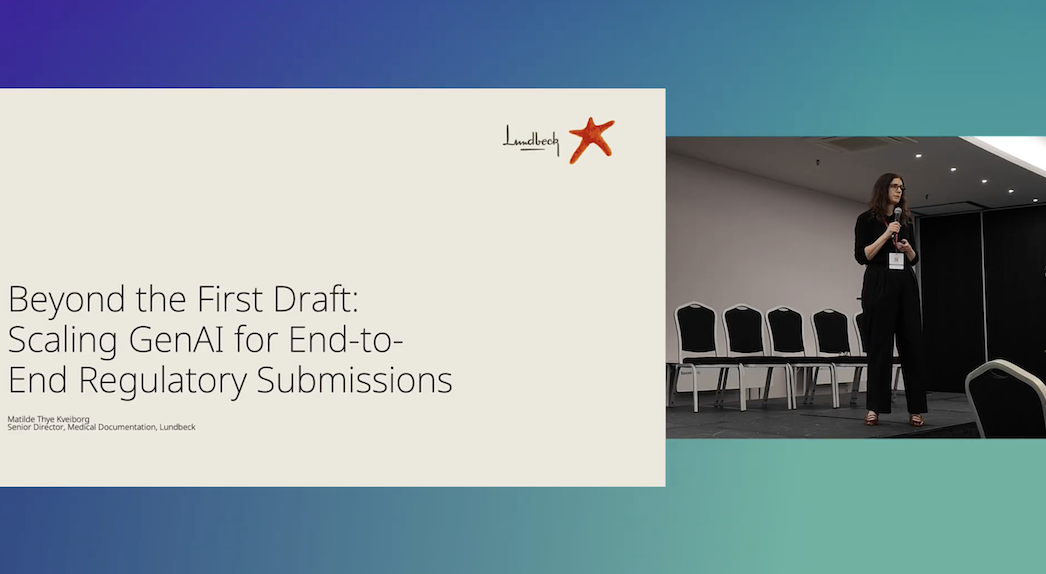

As a Gold Sponsor of EMWA 2026, AlphaLife Sciences hosted a session in Barcelona on 8 May exploring how AI could transform regulatory writing and submission planning.
Matilde Thye Kveiborg, Head of Medical Documentation at Lundbeck, shared the perspective of a mid-size pharmaceutical company preparing a maturing pipeline for submission.
From CSR pilot to submission strategy
Lundbeck began by comparing a manually written clinical study report (CSR) with reports produced using two GenAI-enabled vendor systems. Medical writers and cross-functional reviewers assessed output quality, usability, regulatory robustness, scalability and implementation support. Both systems produced fit-for-purpose CSRs.
The larger opportunity is reducing submission timelines. Today, meaningful drafting of clinical summaries and overviews often must wait for final study results and completed CSRs. This creates a sequential process that can take six to nine months.
Lundbeck is exploring a different approach: using simulated data to produce a complete Phase 3 CSR—and populate connected summaries and overviews—before headline results arrive. Actual figures could then replace simulated data, allowing teams to focus review on outcomes that differ from expectations.
The potential time savings are still being evaluated, but the approach could fundamentally change the post-results workload.
Technology and people
Structured authoring is one of four pillars in Lundbeck’s medical writing AI strategy, alongside support for smaller complex documents, automated formatting and quality control, and project management.
Matilde also emphasized capability building. Lundbeck combined access to AI tools with expert inspiration, responsible-use training, practical experimentation and regular sharing of successful use cases. Within six months, the department had developed strong engagement and a growing pipeline of ideas.
Our perspective
Two themes closely reflect AlphaLife’s approach.
First, regulatory documents require purpose-built workflows. A CSR is not a generic content-generation task; it demands scientific, regulatory and operational depth.
Second, submission documents must be managed as a connected lifecycle. AlphaLife unifies authoring, evidence, reasoning, quality control and review, helping teams reduce manual reconciliation and establish a consistent operating model across R&D.
About AlphaLife Sciences
AlphaLife provides document intelligence infrastructure that helps life sciences teams author, control, review and maintain high-stakes regulatory content with greater rigour across the R&D lifecycle.
