




From Evidence to Impact: Key Takeaways from AlphaLife Sciences at the 2026 DIA Medical Affairs Forum
Mar 05, 2026What happens when cutting-edge AI meets the real-world demands of Medical Affairs?At the 2026 DIA Medical Affairs and Scientific Communications Forum in Boston, the conversation moved beyond theory and into practical transformation. From scaling evidence-driven insights to accelerating compliant scientific communication, the discussions highlighted how AI is reshaping the way life sciences teams generate, synthesize, and deliver knowledge. 🚀📊At AlphaLife Sciences, we shared how generative AI and agentic workflows can help Medical Affairs teams scale high-frequency deliverables—from Medical Information response letters to congress intelligence and post-market evidence narratives—while maintaining scientific rigor, traceability, and compliance. The takeaway was clear: AI is no longer just a concept for the future of life sciences—it is already enabling faster insight generation and smarter scientific communication today. 💡🧠
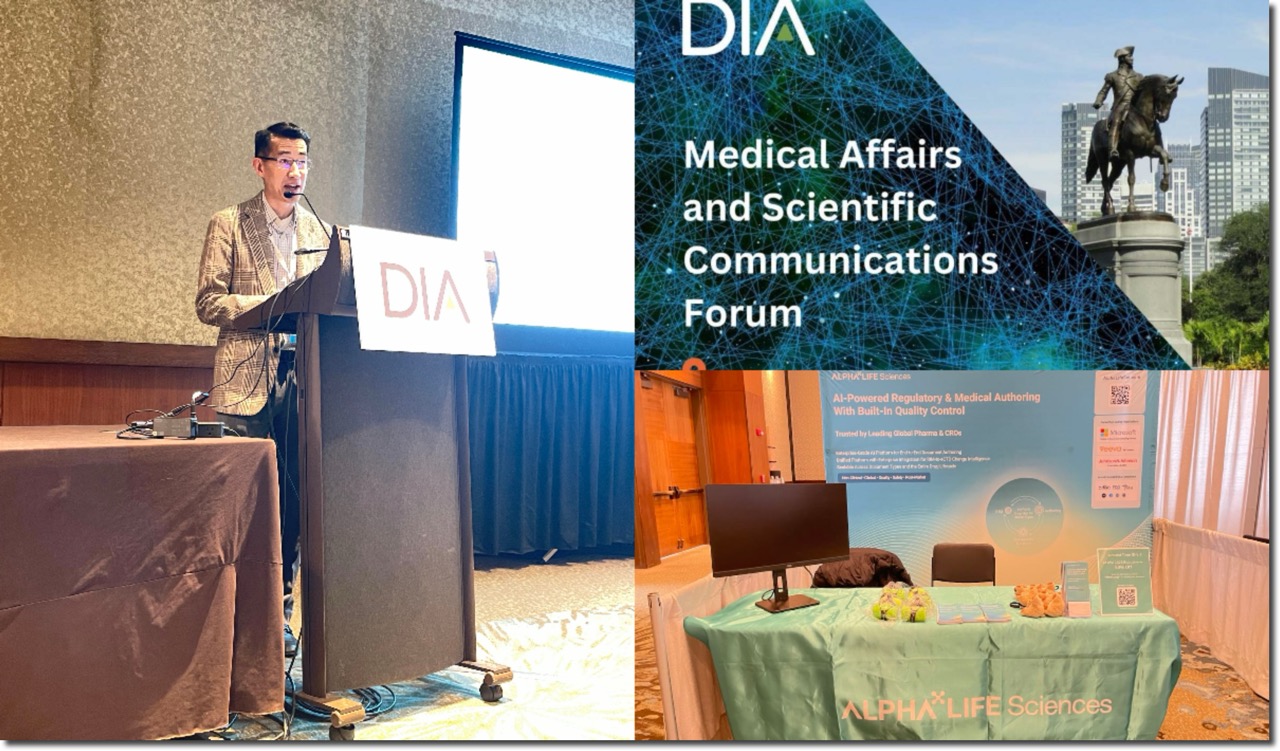
The energy in Boston was truly palpable earlier this month. The 2026 DIA Medical Affairs and Scientific Communications Forum brought together some of the brightest minds across Medical Communications, Medical Writing, and Field Medical disciplines. Set against the backdrop of an industry experiencing explosive data growth and shifting regulatory landscapes, the conversations at The Westin Boston Seaport District were urgent, insightful, and intensely focused on the future.
For us at AlphaLife Sciences, this forum represents a critical intersection. Medical Affairs professionals are increasingly tasked with bridging the gap between vast amounts of complex scientific evidence and the stakeholders who rely on it. Finding strategic synergy and interdepartmental collaboration has never been more vital. That is exactly why we were so thrilled to be at Booth 200, showcasing how our AuroraPrime platform empowers teams to accelerate critical document cycles and turn raw data into actionable, compliant insights,.
Scaling Medical Affairs Insights with GenAI
A major highlight of the event was the presentation delivered by William Chen, our Principal Business Solution Architect and Head of Solutions,. In his session, titled "GenAI-Powered Medical Affairs' Content Insight and Authoring at Scale," William addressed the elephant in the room: the sheer volume and mixed-format nature of modern clinical evidence,.
William noted that the life sciences sector faces a massive $3 to $5 billion industry-wide efficiency opportunity. With rising data volumes, high regulatory scrutiny, and the demand for fast execution cycles, traditional manual authoring processes are no longer sustainable. The answer, he explained, lies in moving from fragmented manual synthesis to governed, AI-orchestrated authoring,.
Instead of treating AI as a simple text generator, William demonstrated how agentic workflows can drive true ecosystem orchestration. He outlined how AuroraPrime seamlessly integrates multi-source, structured evidence intake with QC-embedded drafting to deliver review-ready documents.
Two Powerful Patterns for the Future of Medical Affairs
During his session, William captivated the audience by walking through two highly practical, implementation-ready AI patterns that teams can apply immediately,:
1. Accelerating High-Frequency Deliverables Medical Affairs teams spend countless hours on high-frequency, critical tasks such as searching, triaging, and synthesizing congress intelligence,. William demonstrated how generative AI can rapidly accelerate the creation of Medical Information response letters, conference highlight books, and MA playbooks,. By utilizing natural language search and an automated evidence structuring engine, AuroraPrime digests vast literature libraries and instantly distills them into structured formats,. Crucially, this is all anchored in approved evidence with absolute traceability back to the source data, ensuring scientific integrity is never compromised,.
2. Automating Post-Market Evidence Narratives Moving beyond literature triage, William showcased an end-to-end AI workflow designed for complex post-market evidence narratives. He walked the audience through the seamless progression from initial literature review to Protocol and Study Design ideation, all the way to Clinical Study Report (CSR) writing,. By embedding automated quality control and visual dependency tracking directly into the workflow, the platform helps teams achieve a 50 to 70 percent reduction in writing costs and significantly faster med-legal review cycles. The result is a highly consistent, audit-ready draft that frees medical writers to focus on high-level scientific strategy rather than data transcription.
Looking Forward
The era of intelligent, automated authoring in life sciences is no longer a distant vision; it is a present reality. The incredible discussions we had with industry leaders in Boston reaffirmed that the appetite for secure, scalable, and compliant AI solutions is stronger than ever.
We want to extend a massive thank you to everyone who attended William's presentation and visited our team at Booth 200,. Your insights, questions, and shared experiences are what drive us to continuously innovate.
If you missed us at the event or want to dive deeper into the strategies discussed, we invite you to review our session details and learn how Agentic AI can transform your medical affairs workflows.
Visit our 2026 DIA Medical Affairs and Scientific Communications Forum event page to request a meeting and discover how AuroraPrime can put your clinical documentation on the fast track.
